At the start of 2021, I set myself the goal of making regular reading a habit. By the end of that year, I found that reading consistently had allowed me to get through considerably more books than usual. I wrote it all up in a list.
In 2021, my target had been at least 30 pages a day. In 2022, I nudged that up to 40, and made a point of not breaking the streak. By the end of the year, the total had reached 60 books.
That said, this was never a race. Reading 60 books wasn’t the goal — it was the result. The goal was the daily page count. Setting a minimum like that, rather than a book total, turns out to be considerably more effective, at least for me.
What do I read? How do I choose?
As with any activity you’re trying to turn into a habit, there are plenty of things that can make it feel like a chore. Genre is one of them. Sticking rigidly to the same type of book is a reliable way to burn out. Variety genuinely helps.
I try to keep the mix as broad as possible. Reading two dense history books back to back, for instance, is a good way to end up resenting the second one. Slipping a science fiction novel or a crime thriller in between makes the whole thing more sustainable.
When it comes to choosing which books to read, a few different criteria tend to influence the decision (in no particular order):
- Topics where I feel out of my depth and want to improve
- Topics I know nothing about and assumed I wouldn’t enjoy (some of these have been surprising)
- Classics and well-known books that seemingly everyone has read except me
- Subjects that fall within my professional area and interest me closely
- Books by writers I already like
- Recommendations from people I know
- Reviews and discussion from book communities
5 Stars ≠ Very Good, and 1 Star ≠ Very Bad
Until fairly recently, I also used ratings on platforms like Goodreads or book retail sites as one of my selection criteria. I’ve come to realise this was a mistake.
Take İhsan Oktay Anar’s most recent novel, Tiamat — a book that’s genuinely difficult to follow if you don’t have a background in technical maritime terminology. That difficulty doesn’t diminish the book’s value, or at least it shouldn’t. But a reader who couldn’t follow it might give it one star, and unless they’ve written a review explaining why, there’s no way to know that’s the reason. Not that their having explained themselves would change the fact that the book has a low rating.
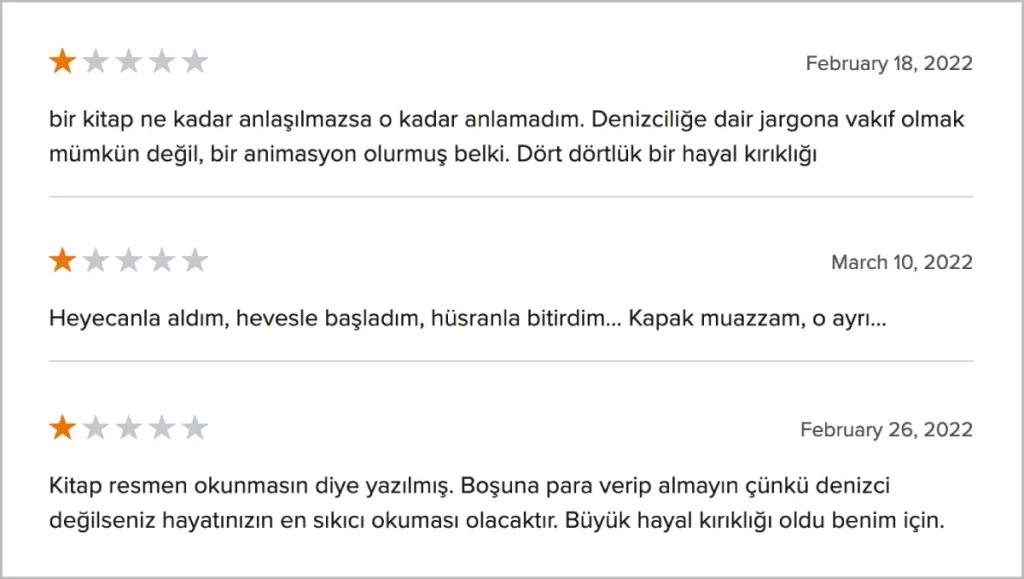
Another example: Bill Gates’s How to Avoid a Climate Disaster, published in 2021. For anyone interested in the subject, it’s a genuinely useful book. But the Turkish translation is, unfortunately, poor enough to make reading it an effort. Does a bad translation justify rating the book itself poorly? Should the quality of a translation affect how we assess the underlying work?
Both things — choosing books by their ratings, and rating books based on entirely personal circumstances — are mistakes I’ve made myself. I’m trying to be more careful about both from here on.
Without going on any further, here’s the list. If you’d like to follow along, you can find me on Goodreads or its newer alternative, Literal.
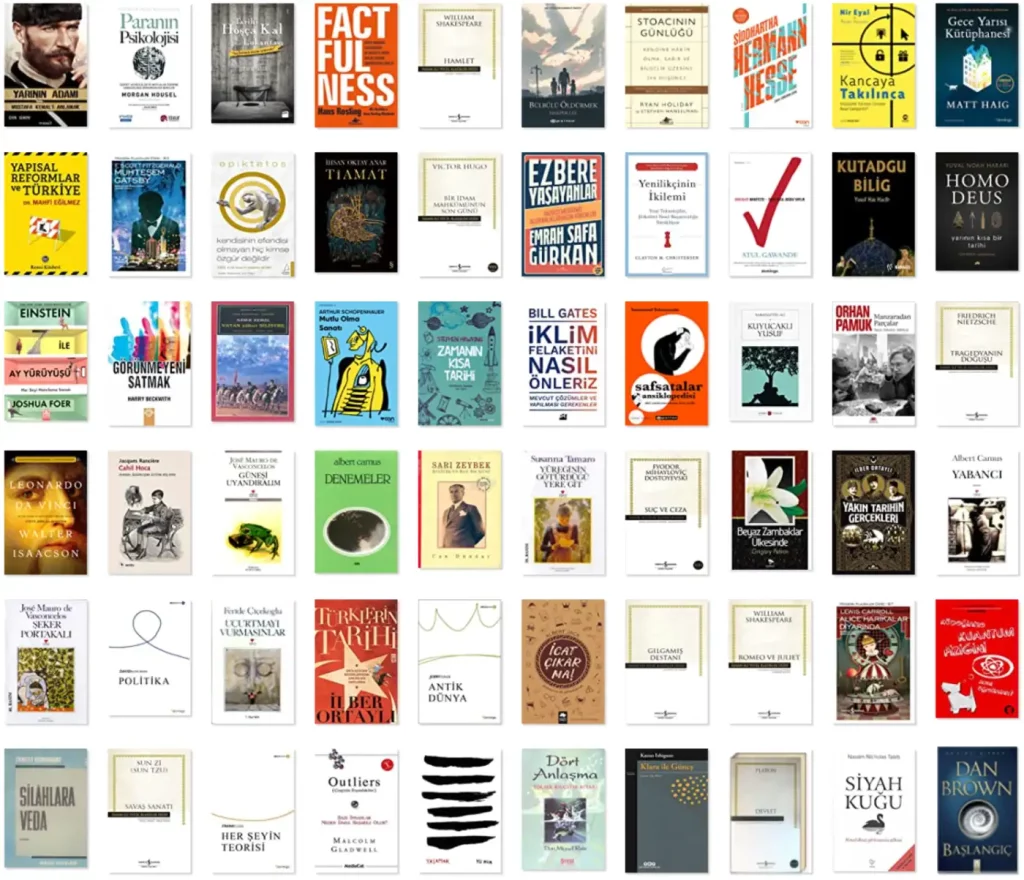
Books I Read in 2022
- The Republic — Plato
- Klara and the Sun — Kazuo Ishiguro
- The Four Agreements: A Practical Guide to Personal Freedom — Don Miguel Ruiz
- To Live — Yu Hua
- Outliers: The Story of Success — Malcolm Gladwell
- Theories of Everything: Ideas in Profile — Frank Close
- The Art of War — Sun Tzu
- A Farewell to Arms — Ernest Hemingway
- How to Teach Quantum Physics to Your Dog — Chad Orzel
- Alice’s Adventures in Wonderland — Lewis Carroll
- Romeo and Juliet — William Shakespeare
- The Epic of Gilgamesh — Anonymous
- That’s Bollocks! — Albert Jack
- The Ancient World: Ideas in Profile — Jerry Toner
- Türklerin Tarihi: Orta Asya’nın Bozkırlarından Avrupa’nın Kapılarına — İlber Ortaylı
- Uçurtmayı Vurmasınlar — Feride Çiçekoğlu
- Politics: Ideas in Profile — David Runciman
- My Sweet Orange Tree — José Mauro de Vasconcelos
- The Stranger — Albert Camus
- Yakın Tarihin Gerçekleri — İlber Ortaylı
- Finland, The Country of White Lilies — Grigory Petrov
- Crime and Punishment — Fyodor Dostoevsky
- Follow Your Heart — Susanna Tamaro
- Sarı Zeybek: Atatürk’ün Son 300 Günü — Can Dündar
- The Myth of Sisyphus and Other Essays — Albert Camus
- Vamos a Calentar el Sol — José Mauro de Vasconcelos
- The Ignorant Schoolmaster: Five Lessons in Intellectual Emancipation — Jacques Rancière
- Leonardo da Vinci — Walter Isaacson
- The Birth of Tragedy — Friedrich Nietzsche
- Manzaradan Parçalar — Orhan Pamuk
- Kuyucaklı Yusuf — Sabahattin Ali
- Safsatalar Ansiklopedisi: Akıl Yürüt(eme)menin Kısa Tarihi — Immanuel Tolstoyevski
- How to Avoid a Climate Disaster: The Solutions We Have and the Breakthroughs We Need — Bill Gates
- A Brief History Of Time: From Big Bang To Black Holes — Stephen Hawking
- The Wisdom of Life — Arthur Schopenhauer
- Vatan Yahut Silistre — Namık Kemal
- Selling the Invisible: A Field Guide to Modern Marketing — Harry Beckwith
- Moonwalking with Einstein: The Art and Science of Remembering Everything — Joshua Foer
- Homo Deus: A Brief History of Tomorrow — Yuval Noah Harari
- Kutadgu Bilig — Yusuf Has Hacib
- The Checklist Manifesto: How to Get Things Right — Atul Gawande
- The Innovator’s Dilemma: The Revolutionary Book That Will Change the Way You Do Business — Clayton M. Christensen
- Ezbere Yaşayanlar: Vazgeçemediğimiz Alışkanlıklarımızın Kökenleri — Emrah Safa Gürkan
- The Last Day of a Condemned Man — Victor Hugo
- Tiamat — İhsan Oktay Anar
- Epictetus / No Man is Free Who is Not Master of Himself — Aslı Perker
- The Great Gatsby — F. Scott Fitzgerald
- Yapısal Reformlar ve Türkiye — Mahfi Eğilmez
- The Midnight Library — Matt Haig
- Hooked: How to Build Habit-Forming Products — Nir Eyal
- Siddhartha — Hermann Hesse
- The Daily Stoic: 366 Meditations on Wisdom, Perseverance and the Art of Living — Ryan Holiday
- To Kill a Mockingbird — Harper Lee
- Hamlet — William Shakespeare
- Factfulness: Ten Reasons We’re Wrong About The World – And Why Things Are Better Than You Think — Hans Rosling
- Tarihi Hoşça Kal Lokantası — Şermin Yaşar
- The Psychology of Money: Timeless Lessons on Wealth, Greed, and Happiness — Morgan Housel
- Yarının Adamı: Mustafa Kemal’i Anlamak — Con Sinov
- The Black Swan: The Impact of the Highly Improbable — Nassim Nicholas Taleb
- Origin — Dan Brown
***
Here’s to reading more in 2022. Happy New Year!