
The idea of an addictive technology controlling those of us who like to think we use our minds freely — or at least like to believe we do — is deeply unsettling.
Ask any social media user how much time they spend on these platforms, and they’ll tell you it’s not that much, and that they have more than enough willpower to manage it consciously. But is that actually true?
The answer is fairly easy to find. Most social media platforms and smart devices now come with built-in screen time tools that show exactly how long you’ve been spending on them.
The sector we might call the “attention industry” has undergone a series of structural changes over time, all aimed at capturing more of our attention. The technologies that have emerged from those changes were built for one purpose: to keep users on platforms for as long as possible — and, ultimately, to make more money.
Note: You might wonder why companies that want you to spend more time on their platforms would offer screen time management tools that work against their own interests. Think of it as a pre-emptive gesture — a way of getting ahead of potential regulation or public health concerns before governments feel the need to step in.
What we see today as the defining feature of the attention industry is the algorithm: a system that processes vast amounts of user data and turns it into personalised experiences. The reason platforms like Facebook, Instagram, YouTube, Netflix and TikTok are so addictive comes down, in large part, to these algorithms.
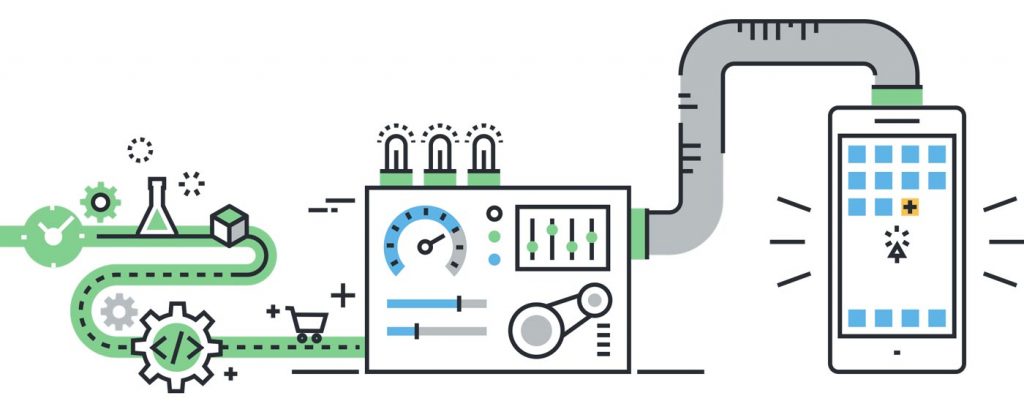
And while algorithms have been around longer than most people realise, today’s versions are considerably more complex, processing a much wider variety of data to deliver increasingly personalised experiences.
Netflix recommends content based on what you’ve watched and how you’ve interacted with it. Instagram’s Explore tab is shaped by your likes, comments and current location. YouTube’s suggested videos are built around your search history, watch history and subscriptions. Quora’s emails are tailored specifically to your Google searches. The more data that accumulates, the more the feed starts to feel like it was made just for you — and the easier it becomes to spend hours on it without getting bored. That’s not accidental.
One of the clearest illustrations of this is TikTok, one of the most talked-about platforms of recent years. I say one of the clearest because TikTok stands apart from the others in a few important ways. It attracts enormous amounts of time from its users, and it exposes particularly younger audiences to content that many consider “pointless and silly”. It’s heavily criticised and heavily used at the same time. The interesting part is the technology that explains that contradiction.
Down the rabbit hole…
A simple but illuminating experiment conducted by The Wall Street Journal sheds some light on how TikTok’s algorithm actually works. How does TikTok’s addictive algorithm function? What effect can it have on people? How does it build appetite? How does it decide what personalised content to show? The WSJ experiment sets out to answer these questions, and goes some way towards doing so.
In the experiment, dozens of new TikTok accounts are created. Hundreds of videos are watched across those accounts. The “For You” tab is then examined to understand what criteria TikTok uses to recommend content to each user.
According to TikTok, the videos that appear in the For You feed are determined by user interactions such as shares, likes and comments; video information such as descriptions, hashtags and music; and device and account settings such as language, location and device type. These factors feed into a ranking system, which in turn shapes what each user is shown.
But the WSJ experiment focuses on just one thing: how long a user spends on a given video, or whether they watch it again. According to WSJ, this single metric is enough for TikTok to build a picture of who you are and what you like.
Every second you pause on a video, every time you replay one, TikTok is watching — and potentially identifying an interest you weren’t even aware you had. From there, it builds a rabbit hole full of content that matches that interest, and from which it becomes increasingly difficult to emerge. The central question the WSJ research is trying to answer is this: can TikTok identify interests the user has never explicitly stated or even consciously acknowledged?
The experiment creates dozens of new bot TikTok accounts. Each is given a different IP address and a different location. None is assigned a gender. Each account is given a set of interests — but those interests are never entered into TikTok itself. TikTok has no direct knowledge of them.
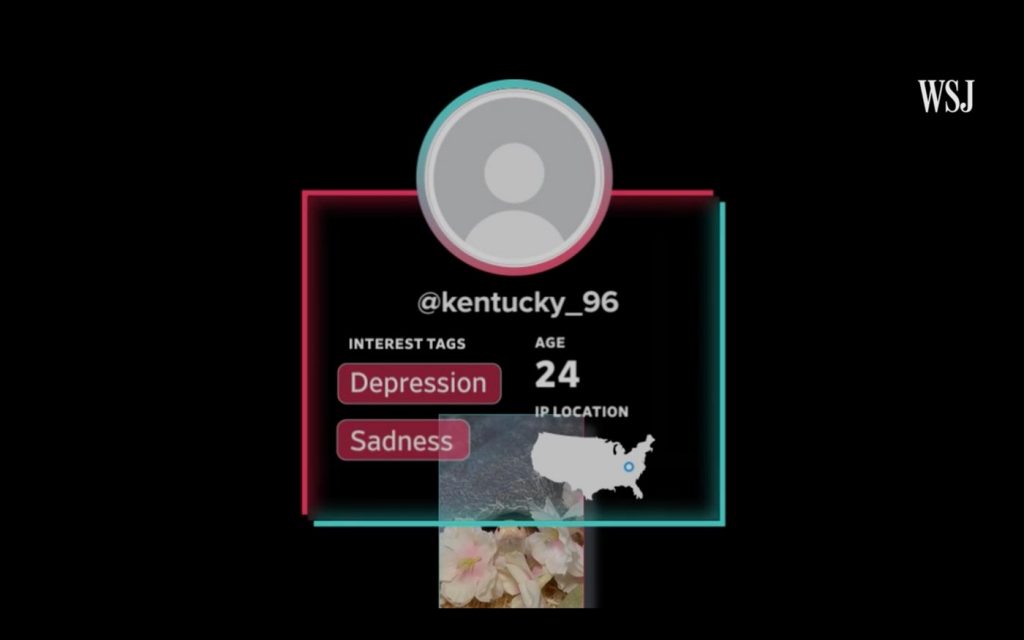
One of these accounts is set up as a 24-year-old based in Henry County, Kentucky, with the username @kentucky_96.
The only action taken to signal each account’s interests is pausing on, or replaying, videos that relate to those interests through similar hashtags or visuals. No other information is given to TikTok.
Initially, the bot accounts are shown popular videos that have been selected by TikTok moderators. As the accounts spend more time pausing on or replaying videos related to their designated interests, the moderator-selected popular videos begin to give way to less popular but more specific content — content that’s more likely to hold that particular user’s attention.
According to the research, TikTok needs a maximum of two hours to identify a user’s hidden interests. In some cases, it takes as little as 40 minutes.
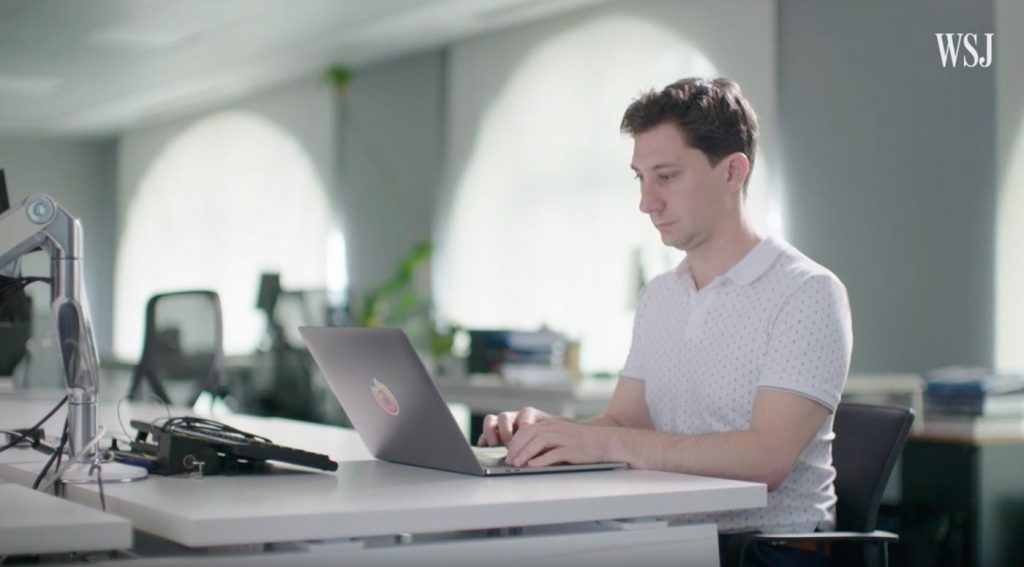
Guillaume Chaslot, a former Google engineer who previously worked on the YouTube algorithm, notes that TikTok operates differently from other social media platforms:
“The algorithm on TikTok can get much more powerful and it can be able to learn your vulnerabilities much faster.”
Comparing YouTube and TikTok, Chaslot continues:
“On YouTube, more than 70% of the views comes from the recommendation engine. So it’s already huge. But on TikTok, it’s even worse. It’s probably like 90-95% of the content that is seen that comes from the recommendation engine.”
Below is a visualisation of the TikTok content consumed by the bot accounts, organised by hashtag groups.
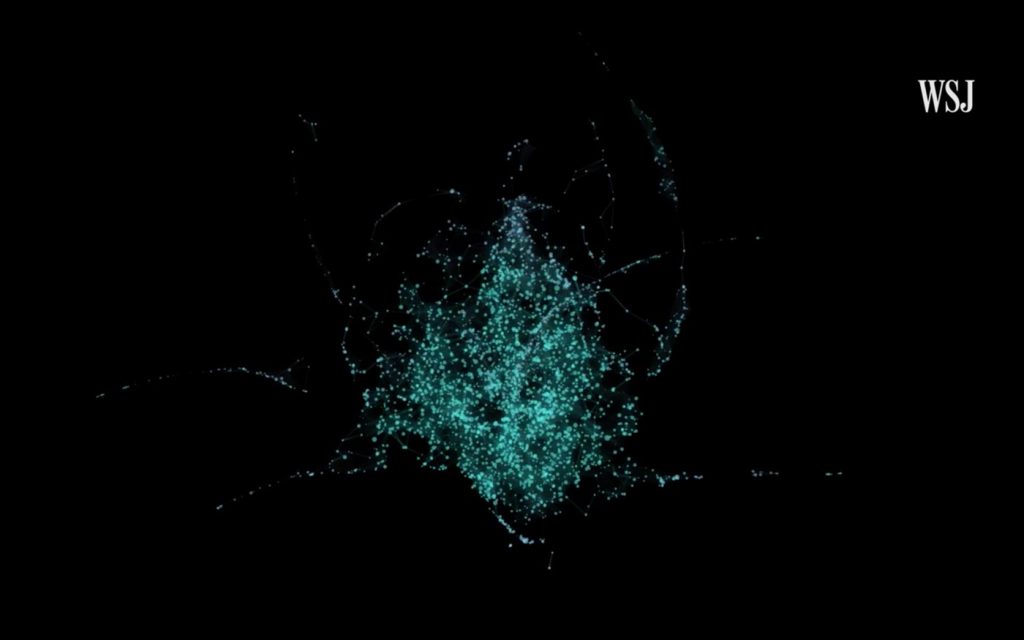
The sections extending outward from the centre in particular directions each represent a hashtag group. The further from the centre, the more specific the content within that group becomes. If the centre contains general animal-related content, for instance, the outer edges of that section contain content about very specific types or breeds of animals.
For the kentucky_96 account, the focus is on depressive content. Within the first three minutes of opening TikTok, 14 recommended videos are skipped. The 15th — a depressive video — is stopped on and replayed.
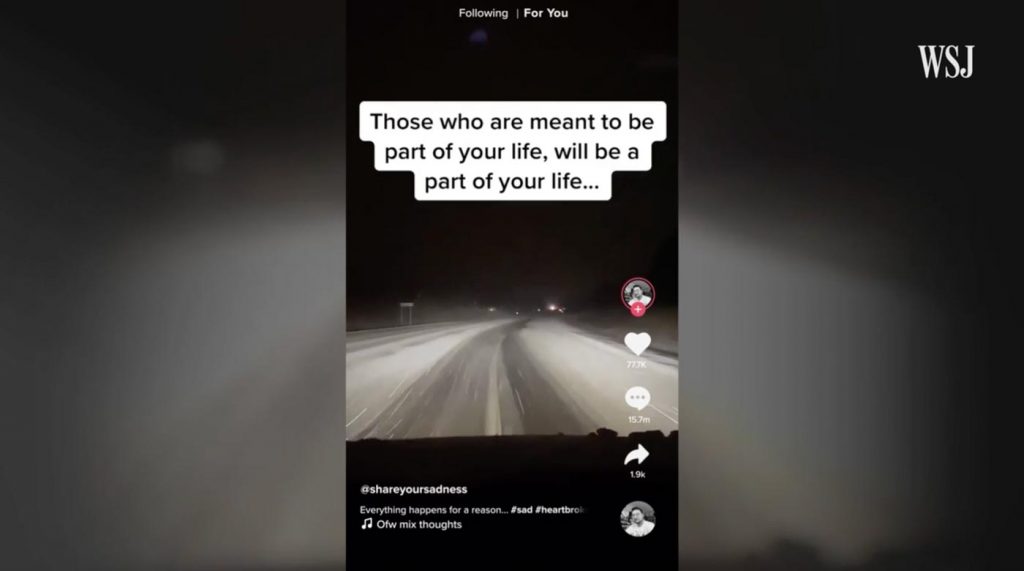
At this point, the username of the video’s creator (@shareyoursadness), the music used (Ofw mix thoughts), the video description (“Everything happens for a reason…”) and the hashtags (#sad, #heartbroken) all signal to TikTok something about the interests of the person watching.
The feed is scrolled through quickly until another depressive video appears, and the same process repeats. Throughout this, TikTok continues to serve popular, widely-viewed videos as it builds a better picture of the user.
Having been given Kentucky as a location, TikTok also serves location-relevant videos to the kentucky_96 account.
As the account continues watching depressive content, TikTok runs a test: it hypothesises that the user might be interested in themes of heartbreak, relationships and love, and serves content in those areas. Those videos are skipped. Content tagged with #mentalhealth, #depression and #anxiety receives more attention.
After a 36-minute viewing session covering 224 videos, TikTok appears to have developed a clear picture of kentucky_96’s interests. The number of depressive and mental health videos being recommended significantly outnumbers relationship and breakup content.
In total, 93% of the 278 videos recommended to kentucky_96 are depression-related.
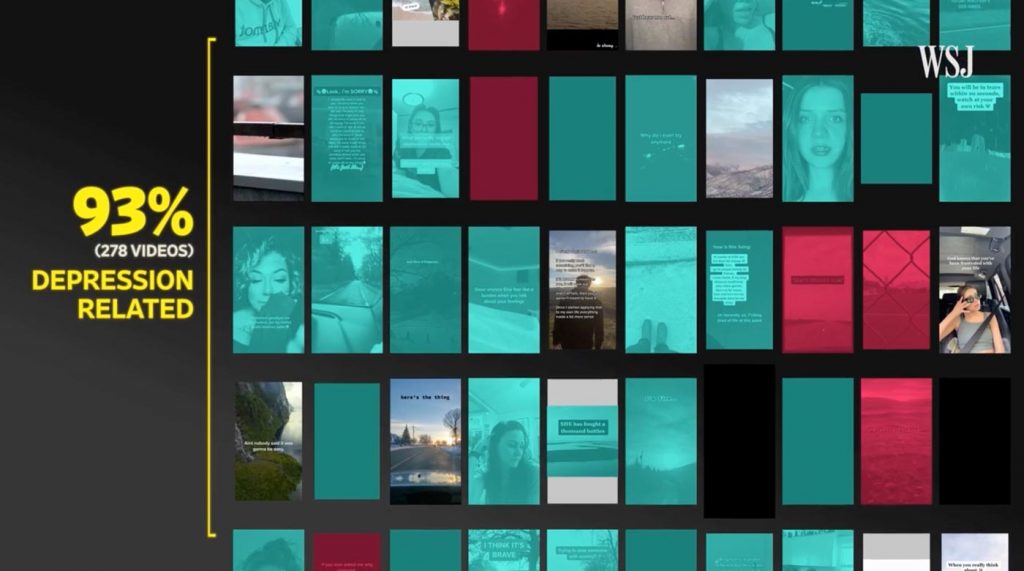
A TikTok spokesperson commented that the remaining 7% is designed to help users discover new content. The data suggests otherwise: the majority of that 7% turns out to be adverts.
The same spokesperson pushed back on the experiment’s findings, noting that the accounts were bots and that real users have more varied interests. The WSJ experiment does, however, include bot accounts with different interests — and arrives at the same conclusion: rabbit hole.
TikTok also pointed to the “Not Interested” option available to users. Chaslot’s response is that this button carries limited weight, since indicating disinterest in something doesn’t mean you don’t engage with it. The experiment bears this out: the only way to escape the rabbit hole is to start watching a genuinely different type of content.
Looking back at the visualisation of TikTok content, it becomes clear that the more specific a user’s engagement becomes within a particular area, the greater the likelihood of encountering harmful content that violates TikTok’s own terms of service — content that moderators have had less opportunity to review.

In its public statement, TikTok says it identifies many terms-of-service violations through automated analysis and human moderators, and reviews content that is reported by users. In other words, it disputes this characterisation.
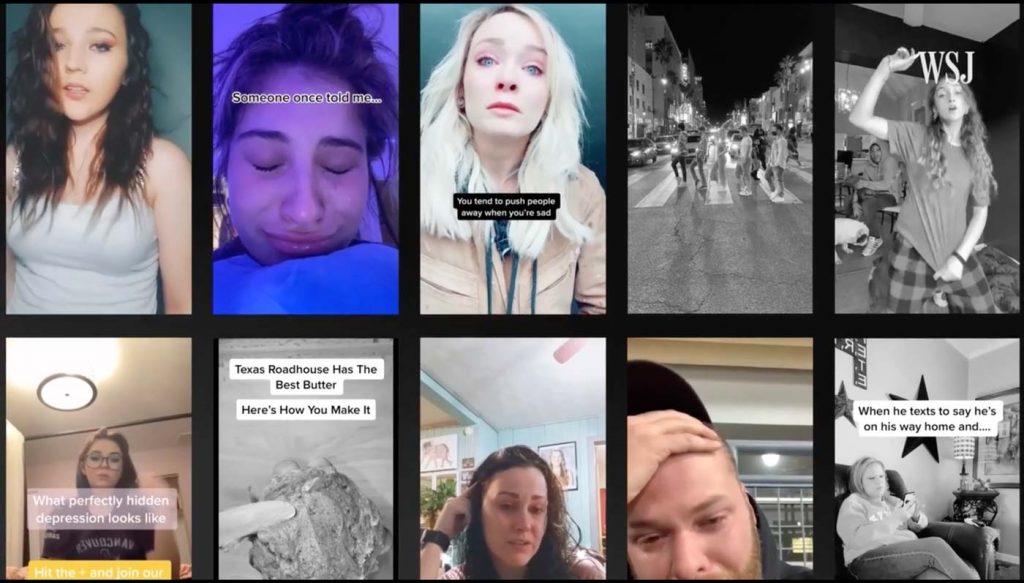
There is genuinely enjoyable, funny and inspiring content on TikTok. But the rabbit hole runs deep, and it can pull users towards seriously harmful content without them realising it. On the surface, the experience feels harmless. The further down you go, the less harmless it becomes — and often, you won’t notice the transition.
Conclusion
TikTok’s algorithm may appear more dangerous than others, but Facebook, Instagram and YouTube all run similar algorithms — constantly learning, constantly refining, working across many different metrics. The point here isn’t to advocate for abandoning these platforms entirely, or to lecture people (especially younger users) about them. It’s to understand how they work, and to recognise that these platforms are built in such a way that a very small amount of data can pull a user into an involuntary rabbit hole. The natural consequence of understanding that is becoming a more conscious, critical user.
Let’s return to the question at the start: are social media platforms controlling us, or are we controlling them?
The answer is fairly straightforward: first we control them (we teach them), and then they control us.