
Did you know that emojis — arguably the defining communication phenomenon of our time — look different depending on the platform you’re using, and that those visual differences can carry genuinely different meanings? And that the emoji you just sent to express exactly what you were feeling might have landed as something else entirely on the other end?
A study by GroupLens Research at the University of Minnesota looked specifically at this: how emojis render differently across platforms, and what those differences actually mean for the people receiving them. The headline finding is fairly uncomfortable — emojis, as a system, have no consistent standard.
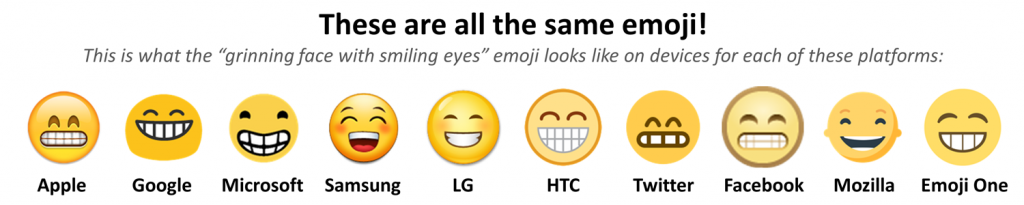
Looking at a single emoji across different platforms makes this concrete. The visual design changes depending on whether you’re on iOS, Android, Samsung, Twitter, or anywhere else — and that part, most people can accept. Platforms have their own design languages. Fine.
What’s more interesting — and more troubling — is that the meaning changes too. As you can see in the image below, a single emoji presents itself with different meanings depending on the platform — and while the visual difference is expected, the shift in meaning is what makes this genuinely interesting.
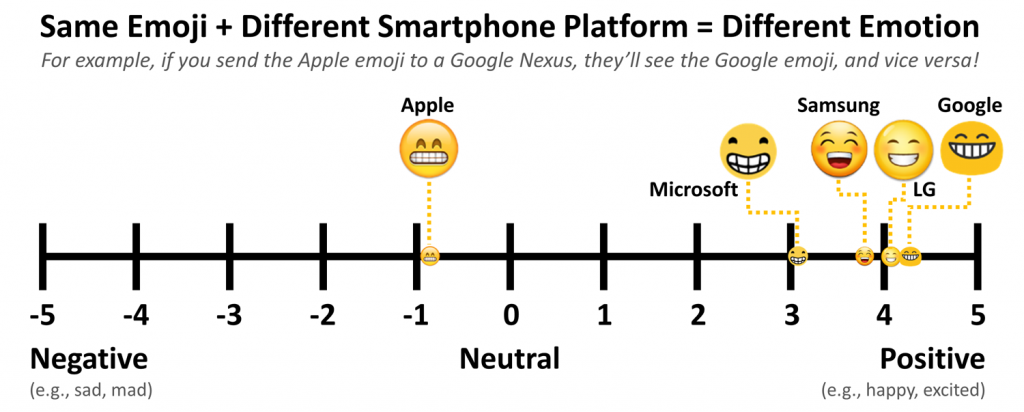
The study also mapped emojis along a sentiment scale. As shown in the chart below, a single emoji can carry meaningfully different emotional weight depending on which device is displaying it.
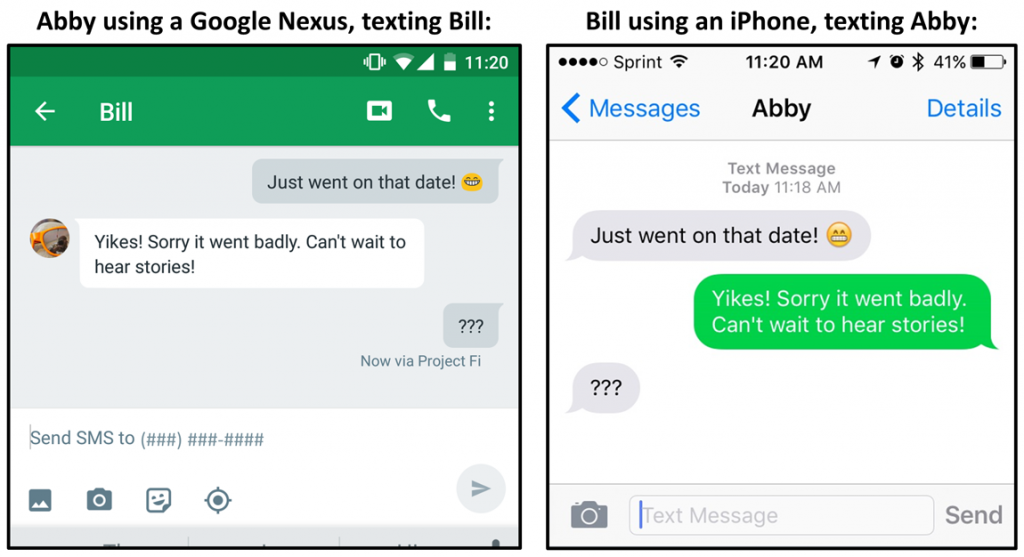
As illustrated above, an emoji you send from your Android device to express that something made you laugh might appear to someone on an Apple device as something that reads as negative or uncomfortable — like the example below. Which is reason enough to think twice about certain emojis before hitting send.
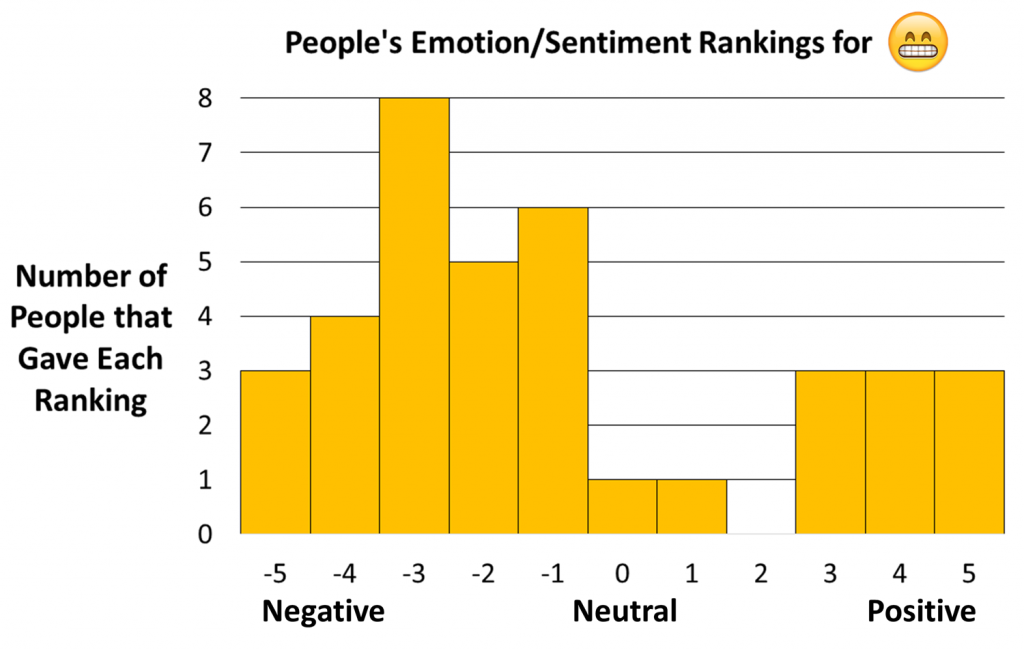
Which raises the obvious question: is the Apple version of that emoji actually negative? The researchers asked study participants to rate it on a scale of -5 to +5. As the table below shows, the answers varied considerably depending on which platform’s version participants were shown — which rather proves the point.
It’s also worth noting that this isn’t a quirk isolated to one or two emojis. The study covers a broad range of them. As shown in the table below, 22 different emojis were mapped across 5 different platforms, tracking how each one is rendered and how frequently it’s misinterpreted.
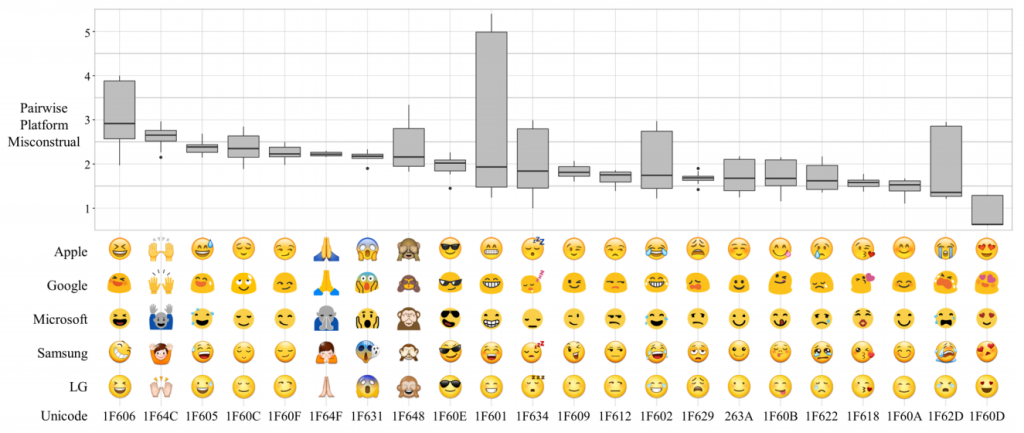
The researchers also broke down which emojis cause the most confusion and which are understood most consistently. As seen below, the results are presented as the top 3 most misunderstood and top 3 most correctly understood emojis per device — with higher scores indicating greater misunderstanding.

Here’s the slightly maddening detail underneath all of this: technically, every platform is following the same standard. All emoji code maps to The Unicode Consortium‘s specifications. The problem isn’t that platforms are going rogue — it’s that they’re each interpreting those Unicode definitions in their own way, producing visually and emotionally distinct results from the same underlying code.
So emojis do have a standard. It’s just that the standard stops at the code level, and never quite makes it to what actually appears on your screen.
The upshot: emojis are now a genuine communication language across virtually every platform, which makes it increasingly odd that there’s no enforced consistency in how they’re displayed. The miscommunication risk is real, the research demonstrates it clearly, and the fix — some kind of standardised rendering — seems both obvious and, for now, nowhere near happening.
In the meantime, perhaps worth a second thought before sending that one emoji you’re convinced means exactly what you think it means.
The full study is available here (PDF).