Let’s start with a story about Leyla.
Leyla lives alone in a flat in Moda, Kadıköy — one of Istanbul’s more affluent, secular neighbourhoods. She’s been thinking about refreshing a few things in her flat: replacing some furniture, filling a few gaps, adding small touches to make the space feel more like her own. A toaster is one of the things on her list. Her priorities are straightforward enough: something reasonably priced and something that fits with the rest of her kitchen. It’s not urgent. But the thought sits quietly at the back of her mind.
Over time, anything related to kitchen décor starts catching Leyla’s eye. The toaster thought, once quietly parked, begins to stir. She starts browsing kitchen aesthetics on Instagram, following a few accounts. She watches home tour videos on YouTube, subscribes to a couple of channels. Because she cares about how things work together visually, she visits various interiors blogs. She finds herself paying particular attention to kitchen scenes in whatever she’s watching on Netflix. She runs a few Google searches on toasters specifically, browses price comparisons, looks at alternative brands.
Funny thing, that — nearly every ad she sees, every post in Instagram’s Explore tab, every video YouTube suggests, seems to be about exactly the sort of thing she’s been looking at.
A few weeks later, Leyla confidently decides to buy a red Smeg toaster. Several hundred pounds’ worth.

Now. Is this what Leyla wanted? The Leyla at the start of this story — the one who thought a toaster wasn’t urgent and that something reasonably priced would do — was that not the same Leyla? What exactly pushed her from “might be nice to have a toaster” to “I’m buying a red Smeg”? Did Leyla make this decision of her own free will?
Was it the fact that virtually every interiors influencer she follows seems to own Smeg appliances? Or the deeply knowledgeable YouTuber who champions minimalist living, moved to the countryside, and regularly gives tours of a kitchen that happens to be full of Smeg? What about the personalised ads that kept appearing? Or the suggested content across her social media feeds? And if you asked Leyla directly, what do you think she’d say?
The honest answer is that the factors that shifted Leyla’s thinking and shaped her purchase decision can’t be reduced to a single cause. There are many triggers at work. Many factors pushed her towards Smeg rather than, say, a perfectly good toaster from a less photographed brand. So where does free will fit into any of this? Or is it an illusion?
I do not at all believe in human freedom in the philosophical sense. — Albert Einstein
Free will is an illusion
Albert Einstein was a theorist. He published his general theory of relativity in 1915, and found his first evidence for it just a few years later, during a solar eclipse in 1919. The Times ran the headline “Revolution in Science — New Theory of the Universe”.
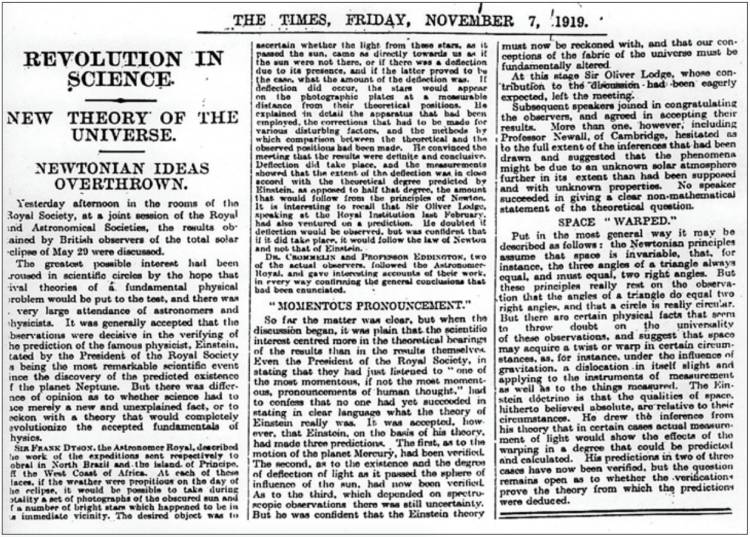
Around that time, Einstein had his doubts about free will. Did it exist, or was it an illusion? Finding evidence either way would take considerably longer.
Over the years, research challenging the existence of free will began to accumulate. The studies considered most groundbreaking by experts at the time were coming largely from brain research laboratories.
The German weekly newspaper Die Zeit organised a debate in Berlin on the topic of “Brain Research and the Loss of Free Will”. It turned, by most accounts, into something of a one-man show by Bremen-based neuroscientist Gerhard Roth. Roth summarised his position in a single sentence: “Free will is an illusion”.
The evidence for Roth’s claim had come from an operating theatre in Montreal. A neurosurgeon named Wilder Penfield was stimulating the brain of an epilepsy patient whose skull was open but who was fully conscious. For a surgeon who had operated on hundreds of epilepsy patients, this was routine. The aim was to locate the diseased tissue where epileptic storms were originating.
During the procedure, Penfield’s stimulating electrode reached the part of the brain controlling the patient’s arm, and the arm moved. Penfield asked his patient why he had moved his arm. The answer was rather interesting. The man said he had moved it because “he had wanted to”.
For Roth, this was significant evidence. But he went further, treating the very belief that we can offer rational explanations for our own behaviour as another illusion. In his view, “we think we know what we’re doing and why, but actually we’re groping around in the dark”.
Are we doing what we want, or wanting what we do?
Further evidence supporting Roth’s position emerged in the 1970s. Neuroscientist Benjamin Libet at the University of California began a series of experiments (Libet Experiments) on will and action that turned everything previously understood on its head. Until then, the accepted understanding was that we first reach a decision to act, and then carry out that action. The Libet Experiments showed the opposite to be true.
Participants were asked to move their wrists whenever they chose, at a moment of their own selection. While doing so, they were asked to watch a specially designed clock and to note precisely when they became aware of the decision to move. Libet simultaneously recorded their brain activity. The result? Activity in the part of the brain responsible for directing the wrist was detected 350 to 400 milliseconds before the participants reported becoming aware of their decision to move.
In other words, as German psychologist Wolfgang Prinz put it: “We don’t do what we want. We want what we do”.
Note: Libet had actually designed these experiments to prove the existence of free will. When the results came out the other way, Roth, who knew Libet personally, said the outcome had been “incredibly embarrassing” for him.
Up to this point, we’ve looked at basic actions more or less independent of external influences, the role of free will in those actions, and the research and ideas that have emerged around them. But can we talk about free will in situations where external factors are numerous and largely invisible? Could someone, like Leyla, be involuntarily shaped by those external factors during a purchase decision, without ever realising it?
The world of algorithms
The purchase decision process describes, in short, the stages a consumer goes through: identifying a need, gathering information about how to meet it, evaluating alternatives, making a decision, and reviewing that decision. Throughout this process, the person who will ultimately make the decision (or believes they will) is subject to various external influences. Some of these are deliberately applied by professionals to shape the decision-making process; others arise naturally from the existence of our evolutionary pressure points. It’s precisely here that the question of how free the individual actually is when making a decision, and if free, how free, comes into focus.
Note: Throughout this post, “purchase” refers not only to buying a product for a price, but also to consuming any piece of content, paid or free: watching a video, reading an article, and so on.
One of the factors influencing purchase decisions is algorithms. Today, almost every user-facing digital platform that has reached a certain scale, or has been technically prepared for growth, uses algorithms. Facebook, Instagram, TikTok, YouTube, Google, Amazon, Twitch, Netflix and countless others use complex algorithms capable of shaping users’ digital experiences. The aim is for three parties to benefit. Users (1) get more personalised content, advertisers (2) get pinpoint accuracy in reaching their target audience, and the platforms themselves (3) multiply their value by satisfying both sides.
Facebook, for instance, has developed a News Feed algorithm to personalise the content users see. Every action a user takes is tracked and recorded: interactions with posts (likes, comments, shares), videos watched, profiles visited, brand websites visited, the location and device from which Facebook is used. From all of this data, an invisible user profile is built. Content, accounts, and ads are then shown to match that invisible profile.
TikTok is undoubtedly one of the attention industry’s most habit-forming current products. As I described in my post “Down the Rabbit Hole: The Power of Algorithms and the TikTok Experiment“ TikTok also runs a complex addictive algorithm. By analysing user behaviour and using the data gathered, TikTok can surface interests the user themselves may not have been consciously aware of, building a “rabbit hole” full of content that matches those interests, from which it becomes increasingly difficult to emerge.
One algorithm whose influence becomes particularly clear when expressed in numbers is YouTube’s. YouTube, as you’ll know, runs a recommendation system similar to other platforms, suggesting videos based on metrics including previously watched content, subscribed channels, their categories, watch times, location, language, and device. According to a statement made by YouTube’s Chief Product Officer Neal Mohan at CES 2018, more than 70% of the videos watched on YouTube come from YouTube’s own recommendations. That means nearly three out of every four videos watched are watched because the algorithm suggested them. That single figure is enough to understand the scale of algorithms’ influence over users.
Every time you use Google, you’re also moving inside an algorithmic system. What determines which results appear for your search? What determines the order in which those pages are ranked? The answer to that “what determines it?” question lies in Google’s search algorithm. The phrasing of your search, the location, day, time, and device you’re searching from, the keywords you used in your previous search, websites you’ve visited before, the type of internet connection you’re on, and if you’re signed into a Google account, the data associated with that account — these and hundreds of other metrics tell the algorithm how to operate. The result is more precise, more personalised results for each user.
Note: The question of how websites are ranked in Google’s search results is closely tied to what’s known as search engine optimisation, or SEO. If you’re curious, you can read my earlier post on the subject: “The Three Shades of SEO: The Good, the Bad, and the Ugly“.
We sense, but we don’t make sense
Another factor that influences purchase decisions is our evolutionary pressure points. In my post “Homo Communicans: The Communicating Human“, I explored these pressure points to explain why communication tools like television and the internet spread and were adopted far more quickly than those that came before. Part of the reason was that they spoke directly to our senses and desires. Naturally, those same senses carry significant weight in the purchase decision process too.
Could a smell you encounter in a shop make you buy something you had no intention of buying? Could music playing in a restaurant make you want to leave before you’ve finished? Could changing the colour of a “Buy Now” button on a website change whether you buy the product or not?
Questions like these have occupied marketing professionals, psychologists, sociologists, user experience researchers and many others for years. The research, studies and tests conducted have consistently shown the importance of engaging human senses and, through those senses, our pressure points.

In 1993, the Chicago-based Smell and Taste Research Foundation ran a study into the effect of scent on purchase decisions. Identical Nike trainers were displayed in two separate rooms. The only difference between the rooms was that one had a scent (floral) and the other did not. The results were striking: consumers in the scented room showed an 84% higher desire to buy the product than those in the unscented room.
Another example of scent marketing: in 2013, a study was conducted in a Belgian bookshop to examine the effect of scent on consumer behaviour. Devices releasing the scent of chocolate were placed at various points around the shop, and the behaviour of customers over a 10-day period was observed. At the end of the study, sales of food-related books had increased by 40%. Sales of other categories of books had also risen by 29%.
An A/B test conducted by HubSpot in 2011 shows us how colour choices on website call-to-action buttons affect behaviour in the decision-making process. HubSpot began showing visitors to a marketing automation client’s website (Performable) the same button in two different colours: green and red. The result: users who saw the red button clicked it 21% more than those who saw the green one.

Note: This result doesn’t mean making every button red is the right move. The effect of colours varies depending on psychological state, cultural context, and the type of product being sold. Black, for instance, represents mourning and death in Western cultures, while white represents purity, cleanliness, and weddings. In China, it’s the other way around: white represents death and funerals, while black is associated with young children. Colour decisions require careful consideration of many factors.
Let’s look at one more example, this time involving hearing. As we know, the reason music embeds itself in memory more effectively than most information is that it contains rhythmic structure. For this reason alone, music plays an important role in marketing. The tempo, volume, genre and mode of music all influence consumer behaviour. A study conducted by Ronald E. Milliman in 1982 showed how background music in supermarkets affects consumer behaviour. According to the research, fast-tempo background music causes customers to move through the shop more quickly, which means they look at fewer products and buy less. Slow-tempo music has the opposite effect: customers spend more time in the shop, look at more products, and buy more as a result.
A flood of desires…
We now know the effects that deliberately designed sensory experiences have on consumer behaviour and ultimately on purchase decisions. We should also talk about the content within those experiences — content that touches our evolutionary pressure points and desires.
These pressure points are what we’ve referred to as “supernormal stimuli”: the sights and sounds we are pre-programmed to notice involuntarily. They broadly cover sex, food and drink, power, wealth, conflict, and violence. From an evolutionary standpoint, these stimuli always draw our attention instinctively. This can make human beings easy targets in almost any context.
These stimuli can be highly effective in shaping purchase decisions too. To amplify that effect, marketing professionals in particular incorporate these supernormal stimuli into their strategies. Some ads feature overtly sexual imagery; others use music carrying tension or fear; some combine multiple stimuli at once.
The body sells. Beauty sells. Eroticism sells. — Jean Baudrillard, The Consumer Society
Take the Carl’s Jr. Super Bowl ad from 2015, featuring American model Charlotte McKinney. (Fair warning: some viewers may consider this NSFW).
This ad manages to pack in several supernormal stimuli at once: sexuality and appetite, working in combination. In a hamburger ad that runs for roughly 45 seconds, it’s difficult to tell it’s about a hamburger for at least the first 30. Before the burger appears, there’s a model walking through a market in a way designed to suggest nudity, various visual comparisons involving fruit and vegetables to heighten the effect, the tone and content of the voiceover, and finally the moment the burger is bitten into, combining appetite and sexuality in a single image. Safe to say the ad is generously stocked with supernormal stimuli.
The ad might look like a simple piece of marketing, and for some people it probably just comes across as odd or irrelevant. But there’s considerably more going on beneath the surface. The fact that it’s built around our evolutionary pressure points and combines several of them simultaneously is quite deliberate. More significantly, the two supernormal stimuli at the heart of the ad — sexuality and appetite — are specifically connected. Research going back to Freud, and continued by many others since, shows a correlation between sexual desire and the desire to eat.
Conclusion
When we talk about free will, we find that our neurons are always one step ahead of us. We know this from the research discussed in this post and from many other studies conducted over the years. We think we decide to act and then act. In reality, we act, and then we decide.
Something similar is happening in the digital world. We tell ourselves we’re watching YouTube videos entirely of our own accord, that we’re posting on Instagram with full awareness, that we — like Leyla — spent several hundred pounds on a red Smeg toaster entirely of our own free will. But we are exposed to countless external factors and, whether we acknowledge it or not, we are instinctively and involuntarily influenced by them.
Let’s close with Schopenhauer on free will:
Man can do what he wills, but he cannot will what he wills. — Arthur Schopenhauer
Sources: Where is Science Going? – Max Planck (Book), The Consumer Society – Jean Baudrillard (Book), YouTube’s AI is the puppet master over most of what you watch – CNET, Smelling the books: The effect of chocolate scent on purchase-related behavior in a bookstore – ScienceDirect, Using Background Music to Affect the Behavior of Supermarket Shoppers – JSTOR, Sex and Eating: Relationships Based on Wanting and Liking – National Center for Biotechnology Information, The Smell of Money – The New York Times, The Button Color A/B Test: Red Beats Green – HubSpot, Charlotte McKinney – Carls Jr Ad Commercial – Super Bowl XLIX 2015 – The All Natural Burger – Charlotte McKinney (YouTube), Chinese Color Theory – The Symbolism of Color in Traditional Chinese Culture – Virginia Commonwealth University, Gesundheit: Der freie Wille ist eine Illusion – Tagesspiegel